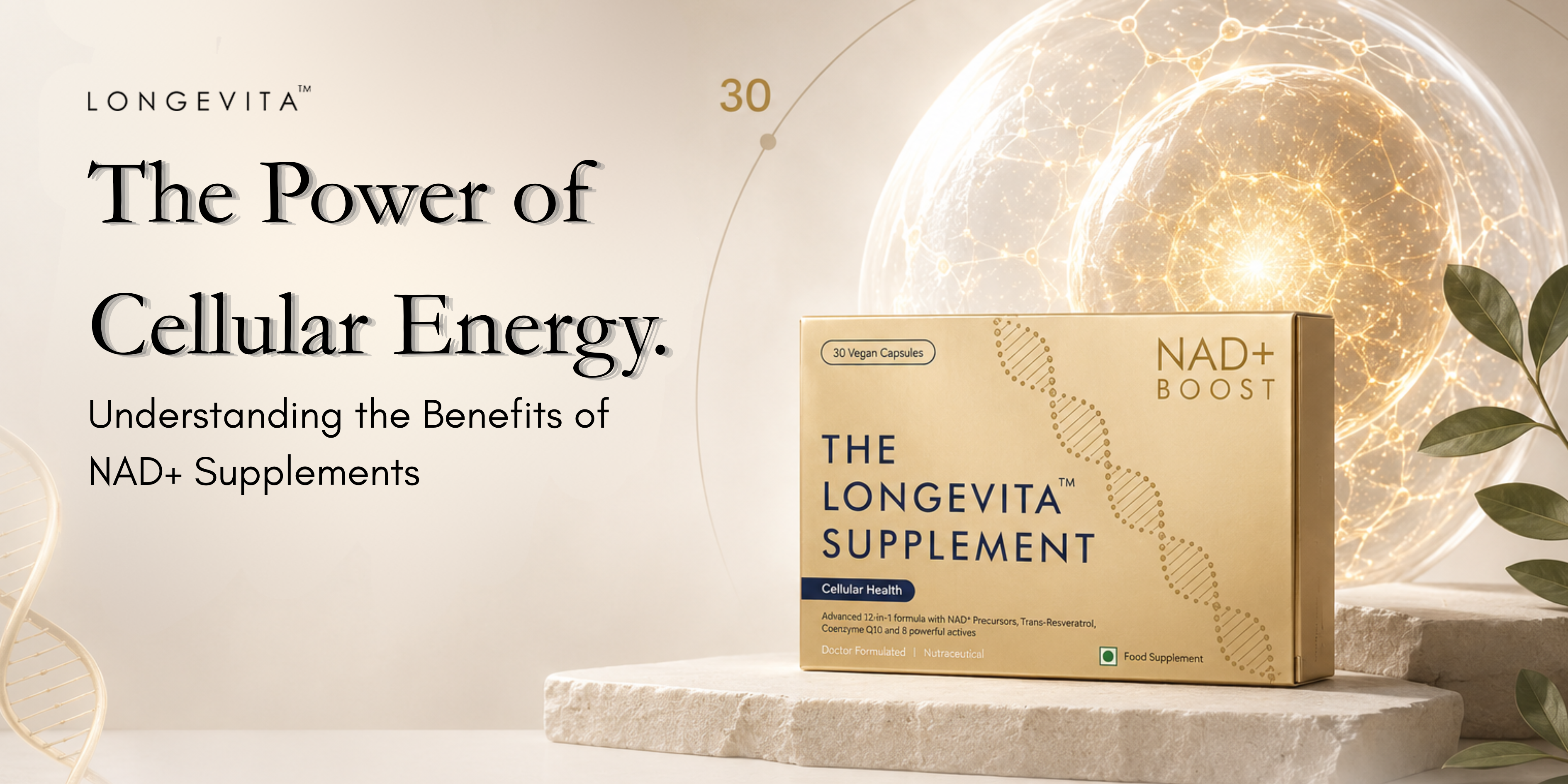
The Power of Cellular Energy: Understanding the Benefits of NAD+ Supplements
If you have been keeping an eye on the latest breakthroughs in preventative wellness and geroscience, you have definitely run into a molecule called NAD+. It is being celebrated everywhere right now, hailed as everything from the ultimate cellular battery recharger to a literal fountain of youth.
But behind the flashy headlines and aggressive supplement marketing, what is the actual biological reality? Why is everyone suddenly talking about the importance and benefits of NAD+ supplements, and how does this coenzyme actually alter your internal systems as the years roll by?
Let us strip away the commercial hype and look at the real science-backed truth about what keeps your cells firing.
What are the primary benefits of an NAD+ supplement, and why is it important?
NAD+ (Nicotinamide Adenine Dinucleotide) is a foundational coenzyme found in every single living cell, essential for cellular energy production (ATP synthesis), DNA repair, and circadian rhythm regulation. The core benefit of an NAD+ supplement (via high-quality precursors like NR or NMN) is its ability to replenish the systemic NAD+ levels that naturally drop due to chronological ageing or chronic stress. Keeping these levels optimised supports mitochondrial health, reduces low-grade neuroinflammation, enhances mental clarity, and expands your overall healthspan.
What Happens to NAD+ After Age 30?
Your body is incredibly good at producing its own NAD+ when you are young, but it does not maintain a permanent, infinite supply. Think of your systemic NAD+ pool like a cellular bank account where ageing forces an aggressive spike in daily withdrawals while simultaneously cutting your regular deposits in half.
Research shows that by the time you cross into middle age, your systemic NAD+ levels can plummet to roughly 50 per cent of what they were during your peak youth. For most of us, this downward trajectory establishes itself right around age 30.
This sudden, age-related deficit happens because of a two-front molecular problem:
Sluggish Production:
The primary pathway your cells use to recycle NAD+, a recycling loop driven by an enzyme called NAMPT, gradually loses its efficiency as you age. Your body simply becomes less capable of manufacturing its own fresh supply.
The NAD+ Vampires:
At the exact same time, chronic low-grade inflammation (often called inflammaging) and accumulated DNA damage force your body to overactivate internal NAD+ consumers.
Enzymes like PARPs (which patch up damaged DNA strands) and CD38 (an immune cell enzyme) start aggressively draining your remaining cellular stores.
When consumption outpaces production after age 30, your mitochondria take the hit. This manifests as those familiar, frustrating signs of early biological ageing: stubborn afternoon brain fog, baseline fatigue, and a noticeably slower metabolic rate.
Should I Take NAD+ at 30?
The short answer is: It depends entirely on your current lifestyle, unique stressors, and preventative goals.
While you certainly are not facing the severe cellular depletion seen at age 50 or 60, age 30 is the exact biological window where the downward trend sets in.
Taking an NAD+ booster (such as Nicotinamide Riboside [NR] or Nicotinamide Mononucleotide [NMN]) in your early 30s functions less like an emergency rescue mission and more like a proactive structural investment. If you are balancing a demanding career, managing chronic sleep deficits, or exposing your body to frequent travel, your cells consume NAD+ at an accelerated rate just to manage that oxidative stress. Supplying your body with high-quality precursors at this stage helps maintain mitochondrial resilience before systemic functional decline takes hold.
The Full Picture: NAD+ Risks and Benefits
Before introducing any new compound into your daily routine, you deserve an honest, balanced view of what it can actually deliver versus where you need to practice standard caution.
The Science-Backed Benefits
-
NAD+ is the essential co-substrate required by your mitochondria to transform the food you eat into ATP, the universal energy currency of your cells.
-
NAD+ directly fuels sirtuins (specifically SIRT1 and SIRT3) and PARP enzymes, which act like cellular mechanics constantly scanning, stabilising, and repairing microscopic tears in your genetic material.
-
Your internal NAD+ pools fluctuate on a strict 24-hour cycle. Keeping these levels optimised helps stabilise your body's natural sleep-wake cycles, reducing daytime lethargy and supporting restorative rest.
The Potential Risks and Side Effects
-
High oral doses of precursors can occasionally cause mild nausea, minor abdominal cramping, or transient headaches in sensitive digestive systems.
-
If you use basic, cheap niacin as an alternative precursor, it can trigger intense, uncomfortable skin flushing. This is completely minimised by opting for advanced, direct boosters like NR or NMN.
-
This area is still being actively studied. While short-term human clinical trials show an excellent safety profile, longevity researchers are still mapping out exactly how decades of continuous supplementation modulate specific cell signalling networks over a lifetime.
Does NAD Help with Autoimmune Disease?
One of the most compelling frontiers in geroscience is how energy pathways directly control immune cell behaviour, a field known as immunometabolism.
In autoimmune conditions (like Multiple Sclerosis, Rheumatoid Arthritis, or Lupus), the immune system undergoes a metabolic reprogramming that locks it into a hyper-aggressive, destructive state. Recent molecular models suggest that optimising NAD+ pathways can help gently balance these systems:
-
Preclinical models show that restoring balanced NAD+ levels can suppress the hyperactivation of astrocytes and microglial cells in the central nervous system, helping to mitigate autoimmune-driven tissue wear and tear.
-
Restoring NAD+ helps fuel the sirtuin enzymes that keep inflammatory signalling markers (like IL-6 and TNF alpha) in check, encouraging immune cells to return to a calm state of balance instead of attacking healthy tissues.
-
Because internal NAD+ dynamics can behave like a double-edged sword during active, acute inflammatory flare-ups, you should never view NAD+ boosters as a solo replacement for standard medical therapies. Always coordinate carefully with your specialist.
Does NAD Actually Reverse Ageing?
Let us be completely candid here: No supplement on Earth can turn back your chronological clock. You will still turn another year older on your next birthday.
However, if we reframe the question around biological age(the actual functional state of your cells, tissues, and internal organs), the scientific consensus shifts from a hard no to a very exciting, partial, at a deeply cellular level.
Longevity researchers look at ageing as an accumulation of specific microscopic failures, such as failing mitochondria, lagging DNA repair, and the buildup of toxic cellular debris. While an NAD+ supplement will not override poor lifestyle habits, restoring optimal coenzyme levels has been shown in human and animal trials to effectively reenergize sluggish mitochondria, accelerate cellular cleaning, and protect your genetic architecture.
By stabilising these core biological pathways, you are not just masking the external symptoms of ageing. You are actively expanding your healthspan, ensuring your physical and mental capacities stay strong across the decades.
Understanding the Options: NAD+ Delivery Formats
-
Oral NR (Nicotinamide Riboside):
High bioavailability at the cellular level. It is gentle on digestion, highly stable, and thoroughly validated in multiple human trials. This format is best suited for daily, long-term healthspan maintenance and baseline support. -
Oral NMN (Nicotinamide Mononucleotide):
High bioavailability as a direct precursor. It offers efficient conversion into NAD+ and is highly favoured in advanced longevity circles. This format is best suited for targeted metabolic, muscular, and mitochondrial support. -
NAD+ IV Therapy:
Bypasses the gut entirely for immediate systemic availability. It provides rapid relief from severe acute burnout or deep brain fog, though it requires periodic clinical optimisation under strict medical supervision.
The Takeaway
NAD+ is not an overnight magic pill for immortality. It is a foundational, hard-working molecule that powers your cells, patches up your DNA, and activates your built-in longevity genes. Supporting this vital resource through intentional lifestyle choices is one of the most practical, science-backed steps you can take today to protect your vitality for tomorrow.
To safely transition from foundational geroscience theory to high-potency molecular optimisation, explore the clinical-grade cellular replenishment protocols engineered at Longevita.
FAQs
-
At what age should you start taking NAD+ supplements?
The ideal biological window to begin taking NAD+ supplements opens in your early 30s, precisely when systemic coenzyme production begins its sharp decline. While clinical depletion becomes severe in later decades, introducing high-bioavailability cellular precursors early helps sustain baseline mitochondrial efficiency and buffers cells against the accelerated oxidative stress of demanding modern lifestyles.
-
Can an NAD+ supplement actively reverse the biological signs of ageing?
NAD+ supplements cannot stop the chronological clock, but human clinical data demonstrate they can reverse biological markers of ageing by restoring mitochondrial energy production. Replenishing these intracellular coenzyme pools effectively fuels continuous DNA repair and stimulates sirtuin activity, allowing older cells to regain a state of optimal metabolic health.
-
Which is better for cellular longevity: oral NR or oral NMN?
Recent human trials indicate that both oral NR and NMN effectively double circulating coenzyme levels, though their entry points and secondary tissue targets differ slightly. While NR is heavily validated in clinical research for long-term neuroprotection and brain ageing, NMN is highly favoured in longevity networks for localised mitochondrial and muscular support.
-
What are the primary side effects of oral NAD+ boosters?
Orally administered NAD+ boosters are exceptionally well-tolerated, with rare side effects limited to transient mild nausea, headaches, or minor abdominal discomfort. Utilising advanced molecular formulas minimises these gastrointestinal risks entirely and completely avoids the painful, intense skin flushing routinely triggered by lower-grade niacin alternatives.
References
-
Covarrubias, A. J., Perrone, R., Grozio, A., & Verdin, E. (2020). NAD+ metabolism and its roles in cellular processes during ageing. Nature Reviews Molecular Cell Biology, 22(2), 119 to 141.
-
Dhinakaran, M. L. (2026). Molecular drivers of ageing and emerging longevity therapies. Open Exploration.
-
Fang, E. F., Lautrup, S., Hou, Y., Demarest, T. G., Croteau, D. L., Mattson, M. P., & Bohr, V. A. (2017). NAD+ in Ageing: Molecular Mechanisms and Translational Implications. Trends in Molecular Medicine, 23(10), 899 to 916.
-
Hansen, M., & Kennedy, B. K. (2016). Does longer lifespan mean longer healthspan? Trends in Cell Biology, 26(8), 565 to 568.
-
Matters, W. I. (2025). NAD+ Benefits: Boost Energy, Brain Health and Cellular Repair. Restore Hyper Wellness Blog.
-
McReynolds, M. R., Chellappa, K., & Baur, J. A. (2020). Age-related NAD+ decline. Experimental Gerontology, 134, 110888.
-
Navarro, M. N., Gómez de las Heras, M. M., & Mittelbrunn, M. (2021). Nicotinamide adenine dinucleotide metabolism in the immune response, autoimmunity and inflammaging. British Journal of Pharmacology, 179(9), 1839 to 1856.
-
Qureshi, P. (n.d.). Should You Be Taking an NAD+ Supplement? Everything You Need to Know. DripGym News.