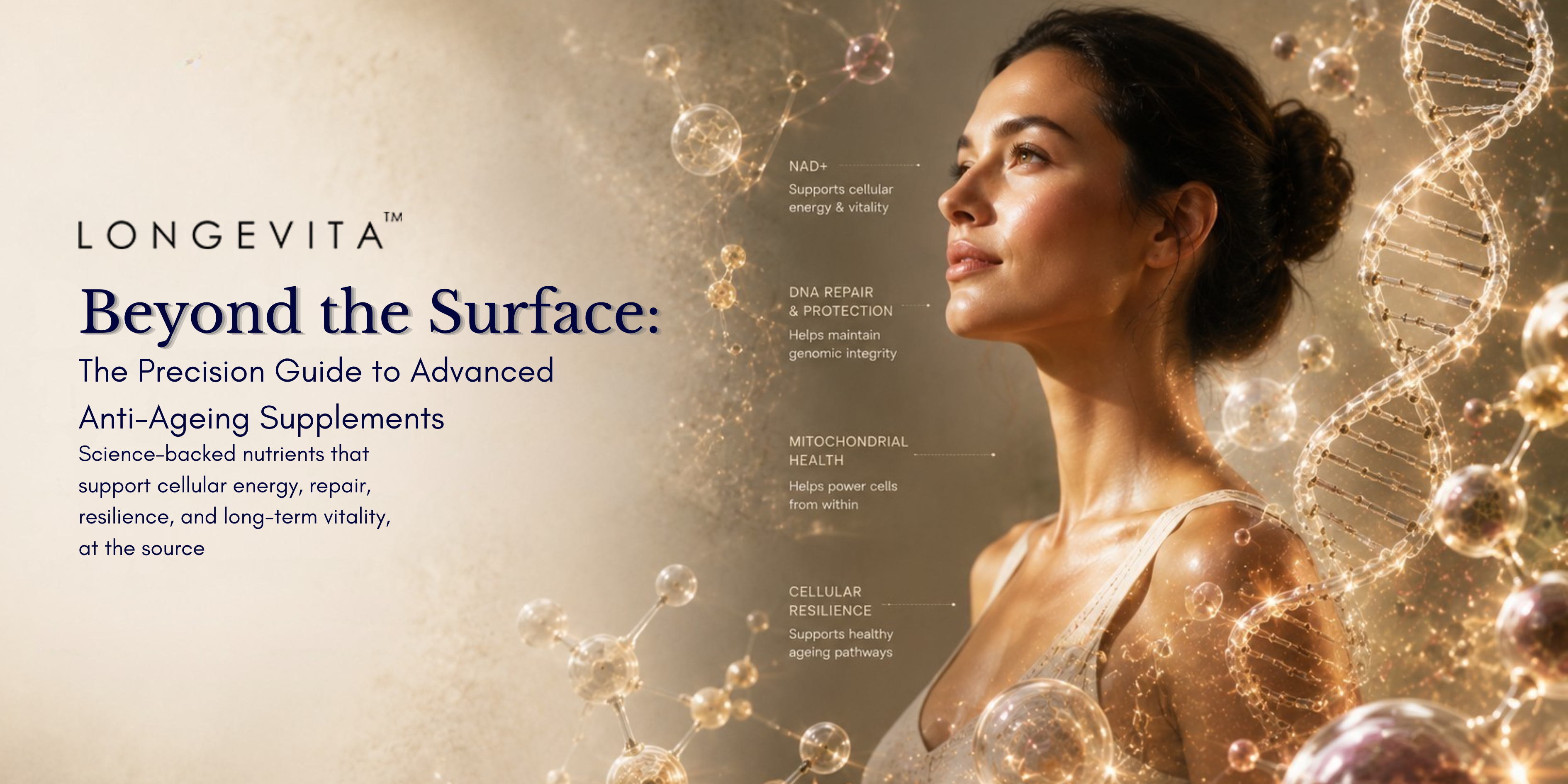
Beyond the Surface: The Precision Guide to Advanced Anti-Ageing Supplements
When many people think about ageing well, they often focus on what they can see in the mirror. But healthy ageing begins much deeper than the skin.
Over the past decade, longevity research has revealed that many of the changes associated with ageing begin at the cellular level. As we grow older, our cells become less efficient at producing energy, repairing damage and maintaining normal function. While ageing is a natural process, scientists are increasingly exploring ways to support the body's resilience through lifestyle choices and targeted nutrition (Yoshino, Baur & Imai, 2018).
This has shifted the conversation from simply preventing nutrient deficiencies to supporting the biological systems that help us maintain vitality, physical function and long-term healthspan.
From Basic Nutrition to Cellular Health
Traditional vitamins and minerals remain essential for overall health. Nutrients such as vitamin D, vitamin C and magnesium support a wide range of important physiological processes.
However, modern longevity research is increasingly focused on the cellular pathways associated with healthy ageing. Scientists are studying compounds that may help support cellular energy production, metabolic health, DNA repair and the body's natural stress-response systems (Gyanwali, Lim & Kennedy, 2022).
Rather than targeting a single symptom, these approaches aim to support the underlying mechanisms that contribute to healthy ageing.
Supporting Cellular Energy: The Role of NAD+
One of the most widely studied molecules in longevity science is Nicotinamide Adenine Dinucleotide (NAD+).
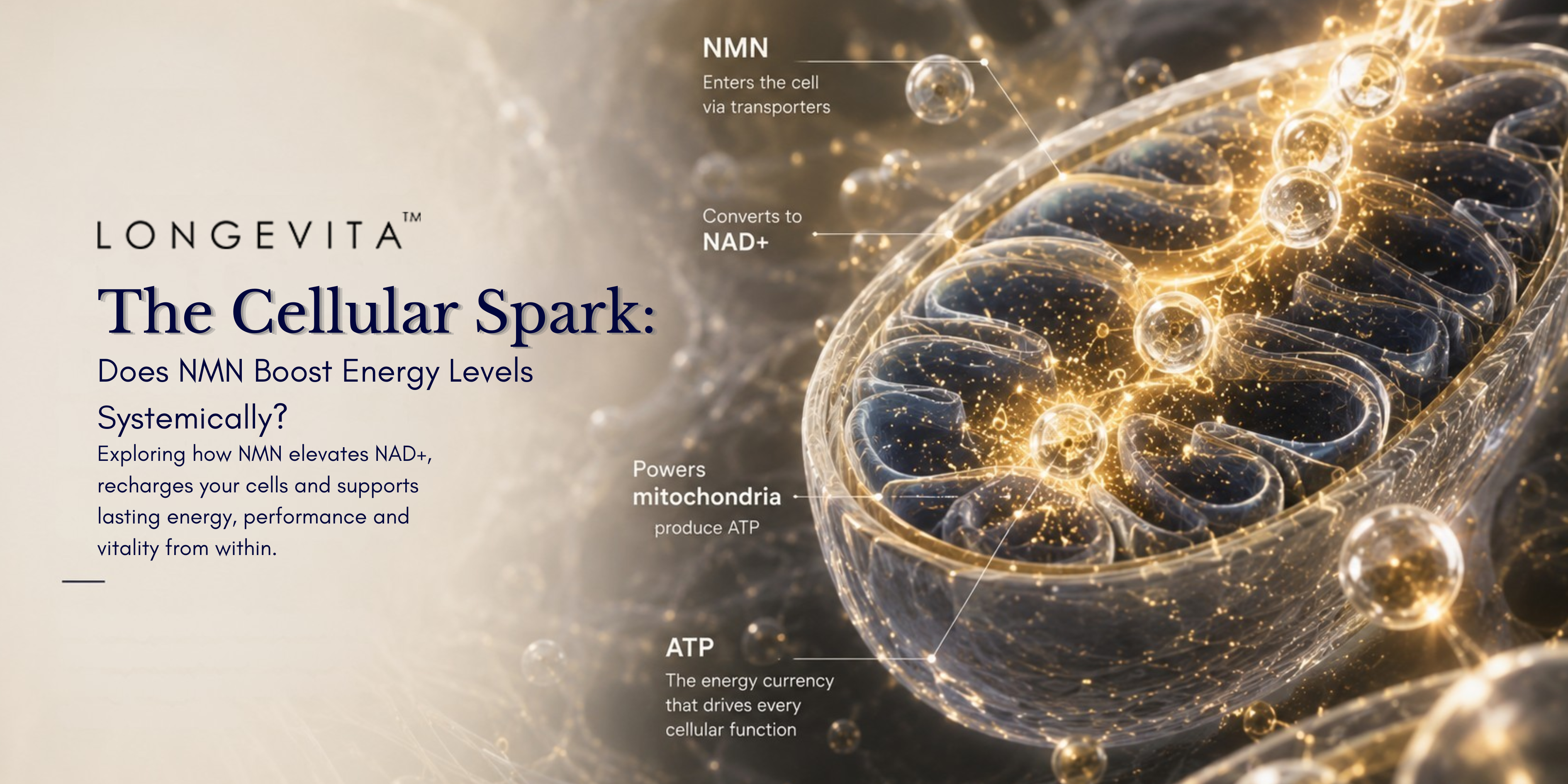
NAD+ is found in every cell of the body and plays a vital role in energy production. It helps mitochondria, often described as the cell's "powerhouses", convert nutrients into usable energy (Yoshino, Baur & Imai, 2018).
NAD+ is also involved in:
-
DNA repair
-
Cellular stress responses
-
Metabolic regulation
-
Activation of sirtuins, a group of proteins associated with healthy ageing
Research shows that NAD+ levels naturally decline with age, which may contribute to reductions in cellular function and resilience over time (Poddar, Wu & Wang, 2022).
To help support NAD+ levels, researchers have investigated compounds such as Nicotinamide Riboside (NR) and Nicotinamide Mononucleotide (NMN). These molecules act as precursors, providing the body with building blocks that can be used to produce NAD+ (Yoshino, Baur & Imai, 2018).
While research in humans continues to evolve, maintaining healthy NAD+ levels remains an area of significant scientific interest.
Coenzyme Q10 and Mitochondrial Health
Another important nutrient associated with cellular energy is Coenzyme Q10 (CoQ10).
CoQ10 is naturally present within the mitochondria, where it helps facilitate energy production. It also functions as an antioxidant, helping to protect cells from oxidative stress generated during normal metabolism (Vance, 2023).
Levels of CoQ10 may decline with age, and researchers have investigated whether supplementation may help support cardiovascular health, energy metabolism and overall cellular function.
Because organs such as the heart, brain and muscles have high energy demands, maintaining healthy mitochondrial function is considered an important part of healthy ageing.
Resveratrol and Longevity Pathways
Resveratrol is a naturally occurring polyphenol found in foods such as grapes, berries and peanuts.
Interest in resveratrol stems from its potential interaction with cellular pathways involved in stress resistance and healthy ageing. Research suggests that resveratrol may influence sirtuins, a family of proteins that help regulate cellular maintenance and repair processes (Sinclair, 2020).
Although research is ongoing, resveratrol continues to be studied for its potential role in supporting metabolic health, cellular resilience and healthy ageing.
Healthy Ageing and Skin Health
The health of our skin is influenced by many factors, including nutrition, hydration, lifestyle habits and environmental exposure.
As we age, the skin naturally loses moisture, elasticity and structural support. Maintaining skin health therefore requires more than topical skincare alone.
Hyaluronic Acid
Hyaluronic acid is a naturally occurring substance found throughout the body, particularly in the skin and connective tissues.
Its primary role is to attract and retain water. By helping to maintain hydration within the skin, hyaluronic acid contributes to skin elasticity and overall appearance (Schulz, 2025).
Researchers continue to investigate how oral supplementation may support skin hydration and healthy ageing from within.
Antioxidant Support
Daily exposure to environmental stressors such as ultraviolet radiation and pollution can contribute to oxidative stress.
Antioxidants help neutralise reactive molecules that may damage cellular structures over time. A diet rich in colourful fruits and vegetables remains one of the best sources of antioxidants, although certain supplements may provide additional support when appropriate (Vance, 2023).
Choosing Supplements Wisely
With so many products available, it can be difficult to separate evidence-based approaches from marketing claims.
When evaluating supplements, consider the following:
Look for Scientific Evidence
Choose ingredients that have been investigated in peer-reviewed research and human studies where available.
Prioritise Quality
Independent testing, manufacturing standards and ingredient transparency can help provide confidence in product quality.
Focus on Long-Term Health
Healthy ageing is rarely the result of a single ingredient. Nutrition, exercise, sleep, stress management and social connection remain the foundations of longevity.
Supplements should be viewed as part of a broader healthy ageing strategy rather than a standalone solution.
The Bottom Line
Healthy ageing is about more than simply adding years to life. It is about maintaining energy, mobility, cognitive function and independence as we grow older.
Research into compounds such as NAD+ precursors, CoQ10 and resveratrol continues to expand our understanding of how cellular health influences ageing. While no supplement can stop the ageing process, some nutrients may help support the biological systems that contribute to long-term vitality and resilience.
Combined with regular exercise, a nutrient-rich diet, quality sleep and healthy lifestyle habits, these approaches may help lay the foundation for a healthier future.
Optimising long-term healthspan demands shifting focus from visible, superficial fixes to the intrinsic biological systems that maintain human vitality. Establish a precise, clinically driven cellular protocol with the pure compounds curated by Longevita.
FAQs
-
How do NAD+ precursors differ from traditional vitamins and minerals?
Traditional vitamins prevent acute nutritional deficiencies, while NAD+ precursors provide the specific cellular building blocks required to optimise intracellular energy production and deep DNA repair. By bypassing standard metabolic bottlenecks, advanced molecules like NMN and NR directly activate sirtuin proteins to maintain systemic healthspan and vitality.
-
Why is Coenzyme Q10 (CoQ10) essential for ageing muscles and organs?
CoQ10 acts as a vital mitochondrial catalyst and antioxidant, facilitating efficient energy production in high-demand organs like the heart, brain, and skeletal muscles. Because natural levels drop sharply with age, replacing this coenzyme helps shield cellular powerhouses from the cumulative oxidative stress that drives functional decline.
-
How does oral hyaluronic acid support skin health from within?
Oral hyaluronic acid works systemically to attract and retain moisture within deep dermal tissues, directly preserving skin hydration and structural elasticity. This inside-out approach goes beyond standard topical skincare, delivering essential structural hydration that supports a resilient extracellular matrix as the body chronologically ages.
-
What is the biological relationship between resveratrol and sirtuin proteins?
Resveratrol functions as a natural polyphenol activator that physically binds to sirtuins, stimulating the cellular repair and stress-resistance pathways associated with longevity. This molecular interaction helps coordinate metabolic regulation, though achieving peak efficiency requires pairing it with an adequate supply of intracellular coenzyme fuel.
References
Gyanwali, B., Lim, X.Y. & Kennedy, B.K. (2022) 'Alpha-ketoglutarate: An essential metabolite coordinating ageing pathways and healthspan expansion', Trends in Endocrinology and Metabolism, 33(12), pp. 814–829.
Poddar, S., Wu, C. & Wang, G. (2022) 'NAD+ Precursors: A Questionable Redundancy and Pharmacokinetic Comparison', Nutrients, 14(15), pp. 3075.
Schulz, E. (2025) Alpha-ketoglutarate at a Glance: Reversing Epigenetic Clocks and Preserving Post-Menopausal Bone Density. MoleQlar Science Updates.
Sinclair, D.A. (2020) Lifespan: Why We Age and Why We Don't Have To. London: Thorsons.
Vance, L. (2023) 'The Benefits of Calcium AKG: Boosting Bone, Liver and Brain Function Through the Krebs Cycle', Xandro Longevity Journal, 2(4), pp. 12–19.
Yoshino, J., Baur, J.A. & Imai, S.I. (2018) 'NAD+ intermediates: The biology and therapeutic potential of NMN and NR', Cell Metabolism, 27(3), pp. 513–528.