Coenzyme Q10 (CoQ10): Supporting Cellular Energy and Healthy Ageing
Many of us notice changes in our energy levels as we get older. Tasks that once felt effortless may require more recovery, while maintaining focus and physical stamina can become increasingly challenging.
While these changes are a natural part of ageing, scientists are continuing to explore the biological processes that influence how well we age. One area of growing interest is mitochondrial health and the role it plays in maintaining energy production throughout life.
At the centre of this process is Coenzyme Q10, commonly known as CoQ10.
Naturally produced by the body, CoQ10 helps our cells generate energy and protects them from oxidative stress. As levels naturally decline with age, researchers have become increasingly interested in its potential role in supporting healthy ageing, cardiovascular health and overall vitality (Hernández-Camacho et al., 2018).
What is Coenzyme Q10?
Coenzyme Q10 is a naturally occurring compound found in virtually every cell of the body. It is particularly concentrated in organs with high energy demands, including the heart, brain, kidneys and skeletal muscles (Turunen, Olsson & Dallner, 2004).
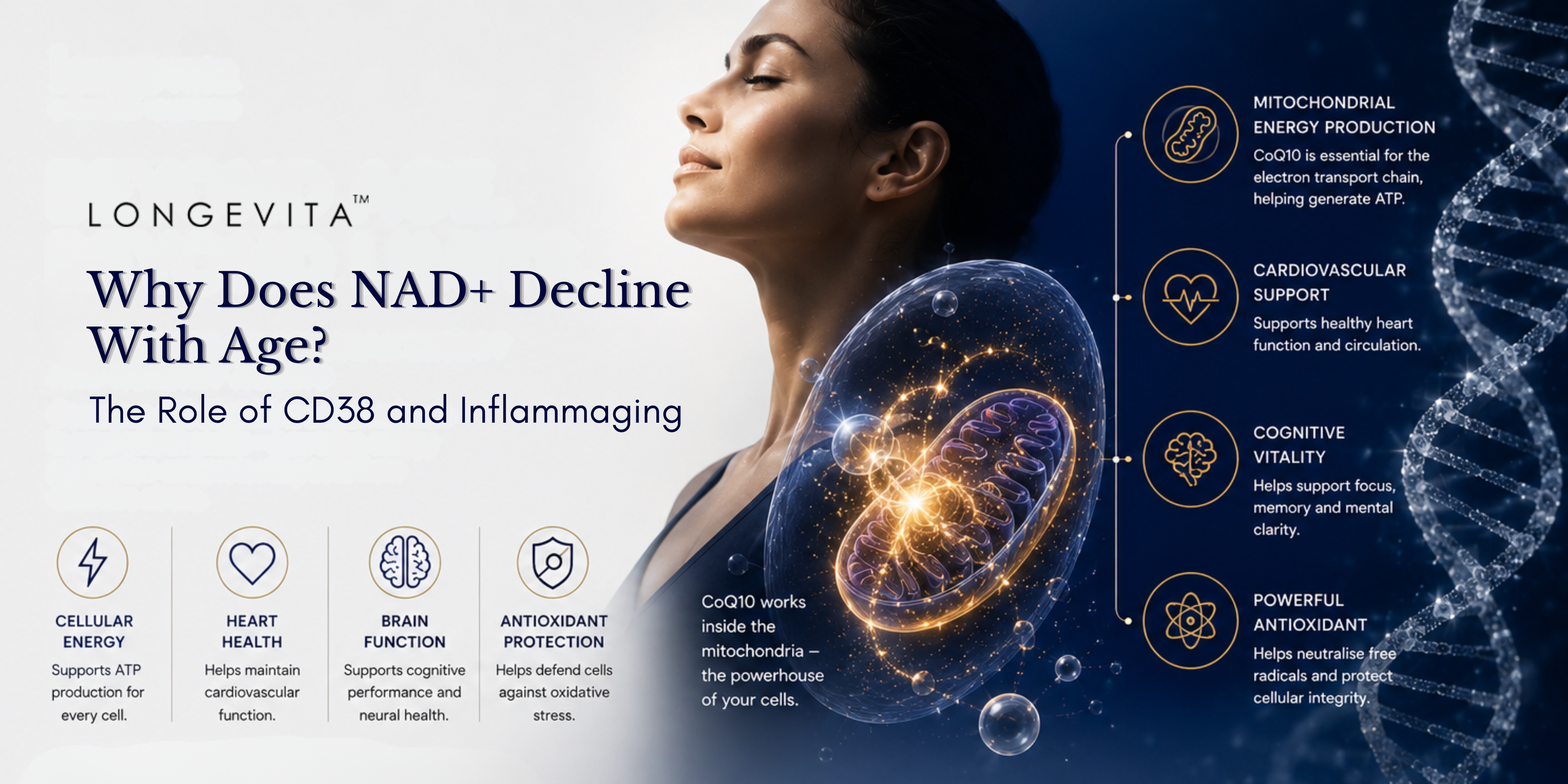
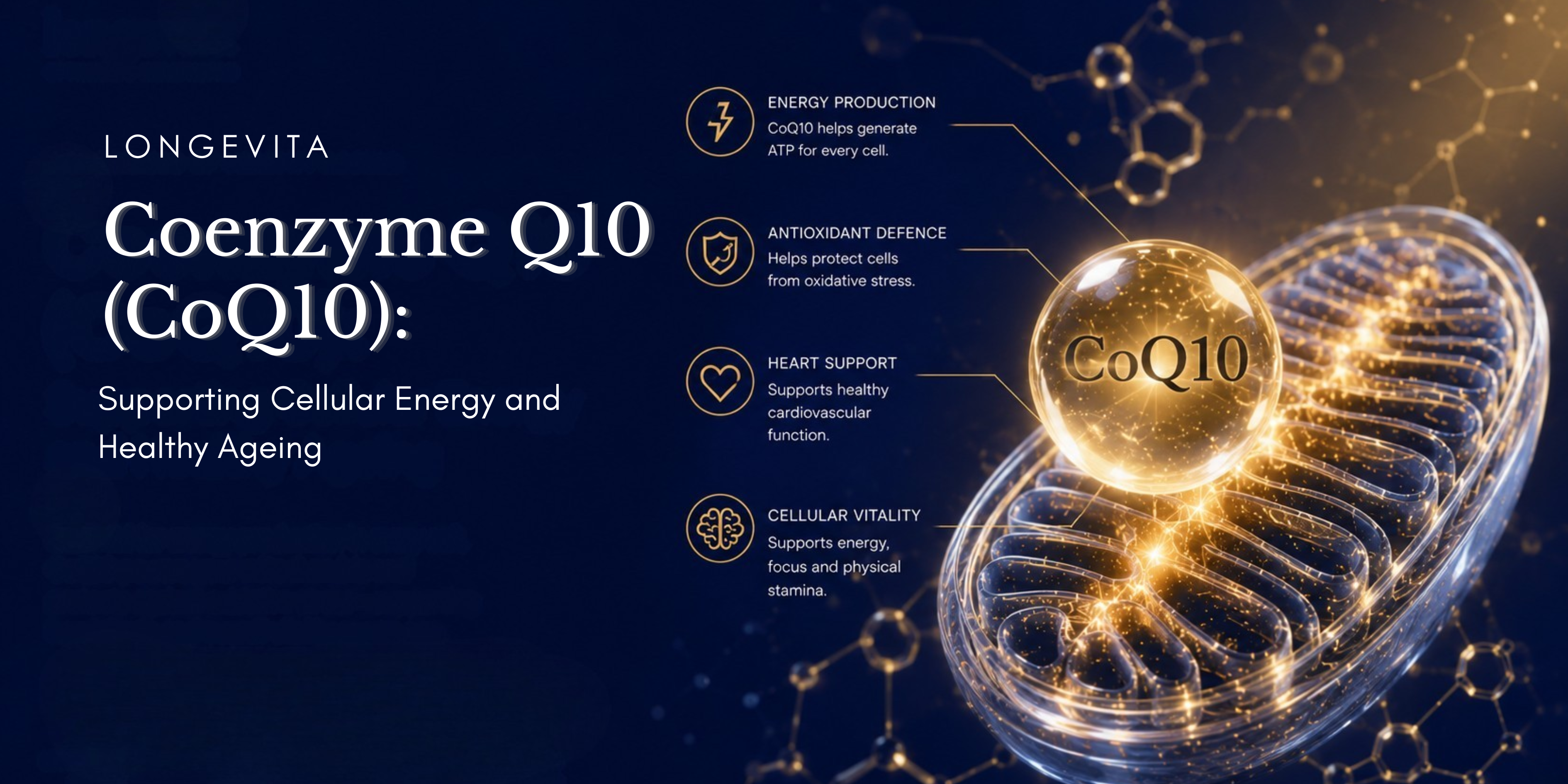
Its primary role is to support energy production within the mitochondria, often referred to as the "powerhouses" of our cells.
Think of mitochondria as tiny energy factories. They convert nutrients from the food we eat into adenosine triphosphate (ATP), the body's primary source of cellular energy. CoQ10 acts as an essential helper within this process, allowing cells to produce the energy needed for normal function (Crane, 2001).
In addition to its role in energy production, CoQ10 also functions as an antioxidant, helping protect cells from damage caused by oxidative stress (Sohal & Forster, 2007).
Why Does CoQ10 Matter as We Age?
The body is capable of producing its own CoQ10. However, research suggests that natural levels gradually decline with age (Hernández-Camacho et al., 2018).
Because CoQ10 plays an important role in energy production, reduced levels may affect tissues that require large amounts of energy, such as the heart, muscles and brain.
This decline has led researchers to investigate whether maintaining healthy CoQ10 levels may help support energy metabolism, cellular function and overall wellbeing as we grow older.
While ageing is influenced by many factors, maintaining mitochondrial health is increasingly recognised as an important component of healthy ageing.
CoQ10 and Cellular Energy
Every movement, thought and heartbeat depends on energy.
Within the mitochondria, CoQ10 plays a central role in the electron transport chain, a process responsible for generating ATP (Turunen, Olsson & Dallner, 2004).
Without adequate CoQ10, cells become less efficient at producing the energy required for normal physiological function.
Because of its role in energy metabolism, CoQ10 has become one of the most widely studied nutrients in the field of healthy ageing and mitochondrial health.
Supporting Heart Health
The heart is one of the most energy-demanding organs in the body, beating approximately 100,000 times each day.
Because of these demands, heart muscle cells contain high concentrations of mitochondria and CoQ10 (Crane, 2001).
Several studies have investigated the relationship between CoQ10 and cardiovascular health. Research suggests that CoQ10 may help support normal energy production within heart muscle cells and contribute to overall cardiovascular function (Mortensen et al., 2014).
The Q-SYMBIO study, one of the largest clinical trials involving CoQ10 and heart health, highlighted the potential importance of maintaining adequate CoQ10 levels in individuals with chronic heart conditions (Mortensen et al., 2014).
CoQ10 and Brain Health
The brain is another organ with significant energy requirements.
Researchers have explored whether supporting mitochondrial function may help maintain cognitive performance and healthy brain ageing.
In addition to supporting energy production, CoQ10's antioxidant properties may help protect neurons from oxidative stress, which is believed to contribute to age-related cognitive decline (Shults et al., 2002).
While research continues, maintaining healthy cellular energy production remains an important area of interest in supporting long-term cognitive health.
CoQ10 and Oxidative Stress
As cells produce energy, they naturally generate reactive oxygen species, often referred to as free radicals.
In excess, these molecules can contribute to oxidative stress, which has been associated with many aspects of ageing and age-related decline (Sohal & Forster, 2007).
CoQ10 acts as an antioxidant, helping neutralise these reactive compounds and supporting the body's natural defence systems.
A number of studies have explored the relationship between CoQ10 supplementation, oxidative stress and inflammation, with findings suggesting potential benefits for maintaining cellular health (Yen et al., 2018).
Understanding Ubiquinone and Ubiquinol
CoQ10 supplements are typically available in two forms.
Ubiquinone
Ubiquinone is the oxidised form of CoQ10 and has been widely used in supplements for decades. Once absorbed, the body converts it into its active form for use within cells.
Ubiquinol
Ubiquinol is the reduced, active form of CoQ10. Some research suggests that ubiquinol may be absorbed more efficiently than ubiquinone, particularly in older adults, although absorption can vary depending on formulation and individual factors (Bhagavan & Chopra, 2006).
Both forms contribute to maintaining CoQ10 levels, and choosing a high-quality formulation is an important consideration.
Supporting Healthy Ageing
While CoQ10 is an important nutrient, it is important to remember that healthy ageing is influenced by many lifestyle factors.
Regular exercise, quality sleep, balanced nutrition, stress management and social connection all play important roles in maintaining long-term health and vitality.
Supplements may provide additional support, but they work best as part of a broader healthy ageing strategy.
The Bottom Line
Coenzyme Q10 is a naturally occurring compound that plays a vital role in cellular energy production and antioxidant defence.
As levels naturally decline with age, maintaining healthy CoQ10 status may help support mitochondrial function, cardiovascular health and overall vitality.
While no supplement can stop the ageing process, CoQ10 remains one of the most extensively studied nutrients in the fields of energy metabolism and healthy ageing. Combined with healthy lifestyle habits, it may help support resilience, wellbeing and long-term healthspan.
Securing uncompromised mitochondrial endurance and systemic molecular purity requires an architected approach to daily cellular supplementation. Explore the precisely synchronised, clinical-grade precursor protocols curated at Longevita.
FAQs
-
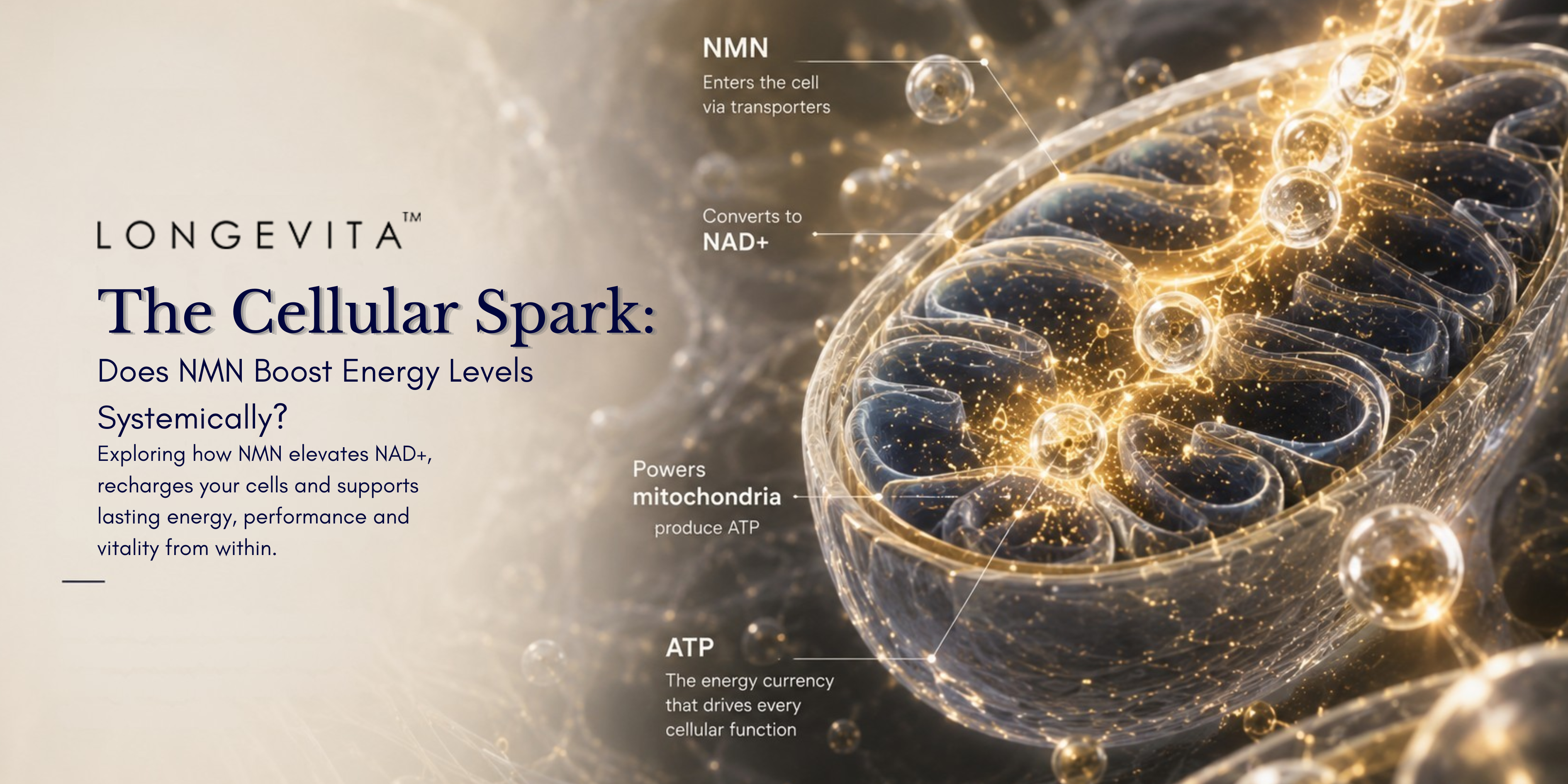
How does NMN physically increase systemic energy levels?
NMN elevates systemic energy by serving as a direct precursor for NAD+ synthesis, enabling the mitochondria to cleanly produce adenosine triphosphate (ATP). Unlike synthetic stimulants that artificially hijack the central nervous system, this intracellular coenzyme replenishment supports natural oxidative metabolism, stabilising daily baseline vitality without causing a cortisol spike.
-
What is the clinical timeline for experiencing NMN results?
Human clinical data indicates that oral NMN significantly elevates circulating NAD+ within 14 days, with physical endurance and structural metabolic adaptations stabilising over 8 to 12 weeks. Initial functional shifts typically manifest as improved circadian rhythm synchronisation and reduced afternoon fatigue, followed by long-term optimisation of insulin sensitivity.
-
How does NMN cross into human tissue so rapidly?
NMN achieves rapid, direct cellular entry by utilising specialised transporters like the Slc12a8 gene located in high-energy intestinal tissues. This dedicated molecular door allows the compound to cross cell membranes within minutes of ingestion, completely bypassing standard enzymatic bottlenecks to convert into active NAD+ in a single step.
-
Can NMN cause a nervous or jittery energy crash?
No, high-purity NMN does not cause a jittery rush or a subsequent crash because it restores cellular biology rather than mimicking nervous system stimulants. The sustained vitality experienced during compliant supplementation is the direct result of optimised mitochondrial quality control, improved synaptic processing speeds, and balanced systemic homeostasis.
References
Bhagavan, H.N. & Chopra, R.K. (2006) 'Coenzyme Q10: Absorption, tissue uptake, metabolism and pharmacokinetics', Free Radical Research, 40(5), pp. 445–453.
Crane, F.L. (2001) 'Biochemical functions of coenzyme Q10', Journal of the American College of Nutrition, 20(6), pp. 591–598.
Hernández-Camacho, J.D., Bernier, M., López-Lluch, G. & Navas, P. (2018) 'Coenzyme Q10 supplementation in ageing and disease', Frontiers in Physiology, 9, Article 44.
Mortensen, S.A., Rosenfeldt, F., Kumar, A., Dolliner, P., Filipiak, K.J., Pella, D., Alehagen, U., Steurer, G. & Littarru, G.P. (2014) 'The effect of coenzyme Q10 on morbidity and mortality in chronic heart failure: Results from Q-SYMBIO', JACC: Heart Failure, 2(6), pp. 641–649.
Shults, C.W., Oakes, D., Kieburtz, K., Beal, M.F., Haas, R., Plumb, S., Juncos, J.L., Nutt, J., Shoulson, I., Carter, J., Kompoliti, K., Perlmutter, J.S., Reich, S., Stern, M., Watts, R.L. & Parkinson Study Group (2002) 'Effects of coenzyme Q10 in early Parkinson disease', Archives of Neurology, 59(10), pp. 1541–1550.
Sohal, R.S. & Forster, M.J. (2007) 'Coenzyme Q, oxidative stress and aging', Mitochondrion, 7(Suppl), pp. S103–S111.
Turunen, M., Olsson, J. & Dallner, G. (2004) 'Metabolism and function of coenzyme Q', Biochimica et Biophysica Acta, 1660(1–2), pp. 171–199.
Yen, C.H., Chu, Y.J., Lee, B.J., Lin, Y.C., Lin, P.T. & Hsia, C.H. (2018) 'Effect of coenzyme Q10 supplementation on inflammatory markers and oxidative stress in adults: A meta-analysis', Nutrients, 10(7), 867.