NAD+ and Healthy Ageing: Why This Cellular Molecule Matters
When scientists study healthy ageing, they often look beyond organs and tissues to the processes taking place inside our cells.
One molecule that has attracted significant attention in recent years is Nicotinamide Adenine Dinucleotide, better known as NAD+.
Although many people have only recently heard of NAD+, it is found in every living cell and plays a fundamental role in how the body produces energy, repairs damage and responds to stress.
As researchers continue to explore the biology of ageing, NAD+ has emerged as one of the most important molecules involved in maintaining cellular health and resilience (Yoshino, Baur & Imai, 2018).
What is NAD+?
NAD+ is a naturally occurring coenzyme found throughout the body.
Think of it as a helper molecule that allows many essential biological processes to function properly. Without NAD+, cells would struggle to produce energy, repair damage, and maintain normal metabolic activity.
Its two primary roles are:
-
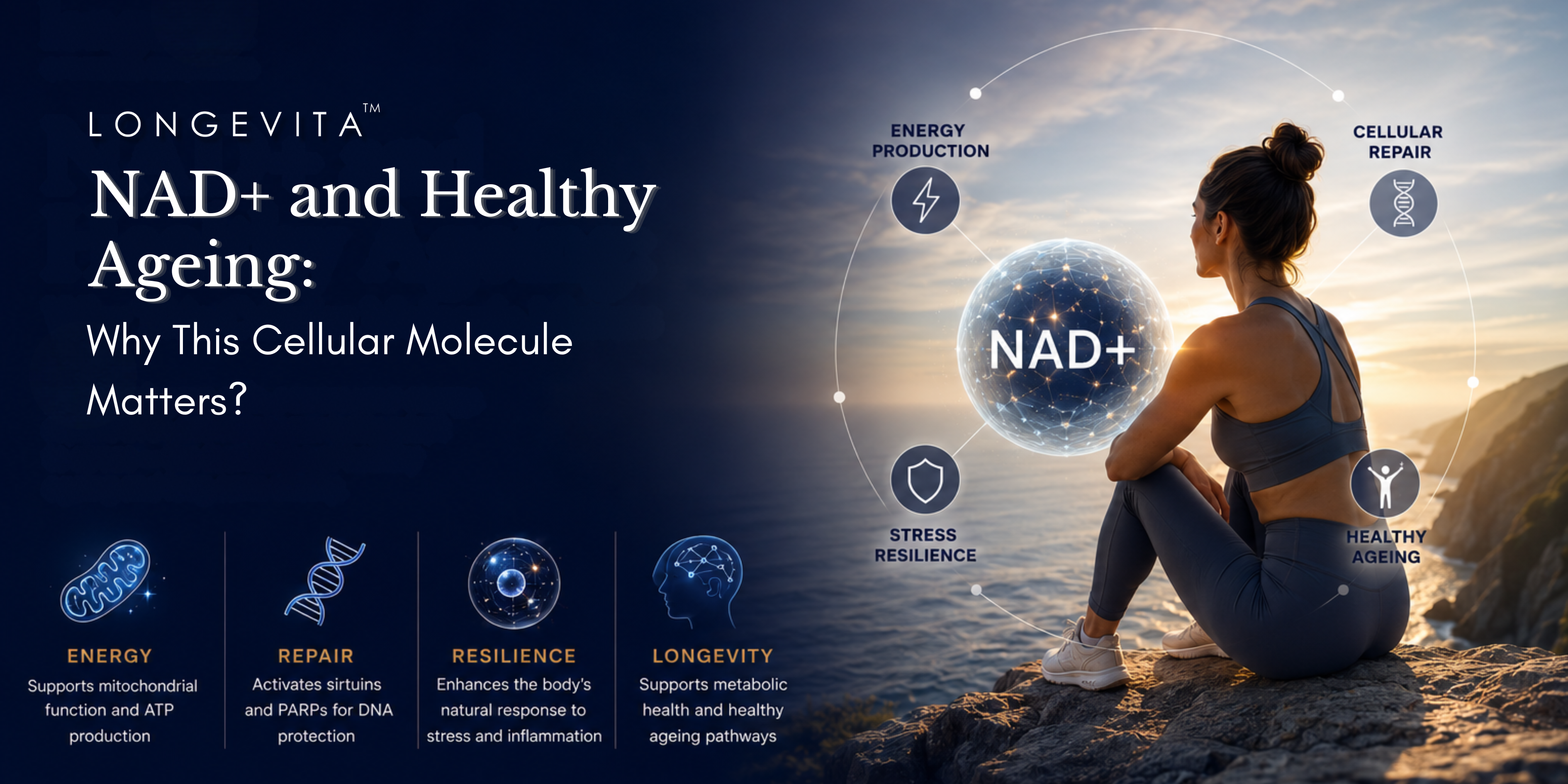
Supporting cellular energy production
-
Assisting with cellular maintenance and repair
Because every organ relies on these processes, NAD+ is required throughout the body, from the brain and heart to the muscles and immune system (Verdin, 2015).
How Does NAD+ Produce Energy?
Every cell requires a constant supply of energy to function.
Inside our cells are structures called mitochondria, often referred to as the cell's "powerhouses". Their job is to convert nutrients from food into adenosine triphosphate (ATP), the body's main source of cellular energy.
NAD+ plays a central role in this process by helping transfer electrons during cellular respiration, allowing mitochondria to generate ATP efficiently (Yoshino, Baur & Imai, 2018).
Without sufficient NAD+, energy production becomes less efficient, which is one reason researchers are interested in how declining NAD+ levels may influence ageing.
NAD+ and Cellular Repair
NAD+ does much more than support energy production.
It is also required by several groups of proteins involved in cellular maintenance and repair.
Sirtuins
Sirtuins are often described as proteins that help cells respond to stress and maintain normal function.
Research suggests they play important roles in metabolic health, inflammation regulation and healthy ageing. However, sirtuins require NAD+ to function effectively (Imai & Guarente, 2014).
PARPs
NAD+ is also essential for poly(ADP-ribose) polymerases, commonly known as PARPs.
These proteins help identify and repair DNA damage that occurs naturally throughout life. Maintaining healthy DNA repair mechanisms is considered an important aspect of long-term cellular health (Verdin, 2015).
Why Does NAD+ Decline With Age?
One of the most significant findings in longevity research is that NAD+ levels naturally decline as we grow older.
Scientists believe several factors contribute to this decline, including increased cellular stress, reduced production and greater demand for NAD+ by repair processes (Yoshino, Baur & Imai, 2018).
Lower NAD+ levels have been associated with:
-
Reduced cellular energy production
-
Increased oxidative stress
-
Impaired cellular repair
-
Age-related metabolic changes
While ageing is influenced by many factors, maintaining healthy NAD+ levels has become an important area of scientific investigation.
Can Increasing NAD+ Levels Support Healthy Ageing?
Researchers have explored whether restoring NAD+ levels may help support cellular function as we age.
Animal studies have shown promising results, with higher NAD+ levels associated with improvements in energy metabolism, mitochondrial function and markers of healthy ageing (Yoshino, Baur & Imai, 2018).
Human research is still developing, but early studies have reported potential benefits for cardiovascular health, metabolic function and aspects of immune health (Martens et al., 2018).
While there is currently no evidence that increasing NAD+ can stop or reverse ageing, maintaining healthy NAD+ levels may support several biological systems involved in long-term health and vitality.
Is NAD+ the Same as Vitamin B3?
Not exactly.
However, the two are closely connected.
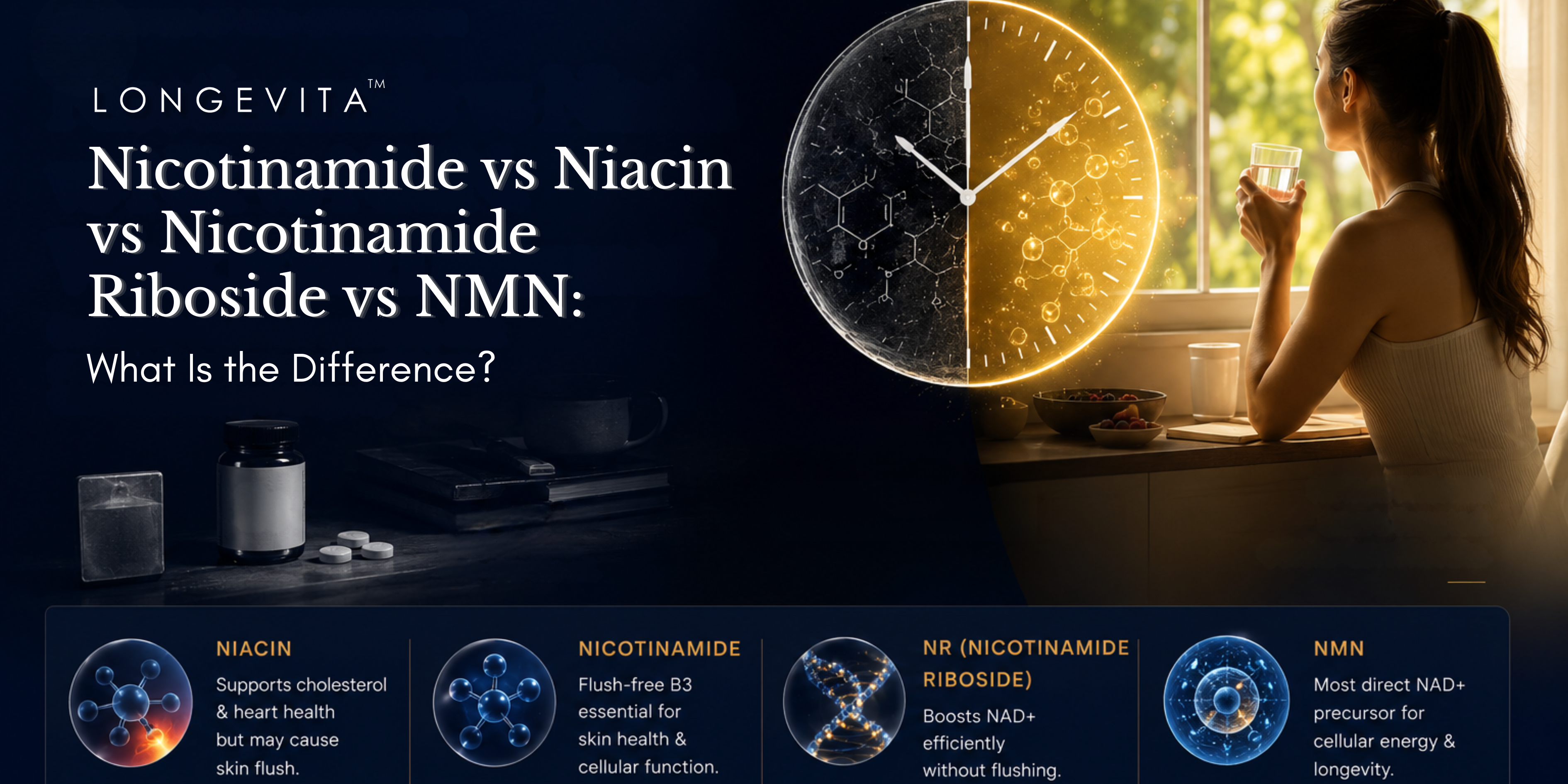
Vitamin B3 compounds such as niacin, nicotinamide, nicotinamide riboside (NR) and nicotinamide mononucleotide (NMN) act as building blocks that the body can use to produce NAD+ (Poddar, Wu & Wang, 2022).
Think of these nutrients as the raw materials, while NAD+ is the finished molecule that cells ultimately use.
Because the body's ability to maintain NAD+ may become less efficient with age, researchers have investigated whether these precursor compounds can help support healthy NAD+ levels.
Supporting Healthy NAD+ Levels
While research into NAD+ supplementation continues, several lifestyle habits may help support healthy NAD+ metabolism.
Regular Exercise
Physical activity has been shown to influence pathways associated with NAD+ production and mitochondrial health (Cantó et al., 2015).
Quality Sleep
Sleep is essential for cellular repair, recovery and metabolic regulation.
Balanced Nutrition
Foods containing vitamin B3 provide important building blocks for NAD+ production.
Calorie Awareness and Metabolic Health
Research suggests that maintaining metabolic health may help support some of the biological pathways associated with NAD+ and healthy ageing (Cantó et al., 2015).
NAD+ Precursors
Compounds such as nicotinamide riboside (NR) and nicotinamide mononucleotide (NMN) continue to be investigated for their ability to support NAD+ levels in humans (Yoshino, Baur & Imai, 2018).
The Bottom Line
NAD+ is one of the most important molecules involved in cellular energy production and maintenance.
As levels naturally decline with age, researchers are increasingly interested in understanding how NAD+ influences healthy ageing, metabolic function and long-term vitality.
While much remains to be learned, current evidence suggests that maintaining healthy NAD+ levels may support many of the biological processes that help us stay active, resilient and healthy throughout life.
Sustaining the microscopic networks responsible for baseline energy production and genomic maintenance requires an unhindered molecular foundation. Safeguard your long-term cellular resilience with the scientifically vetted, pure precursors developed by Longevita.
FAQs
-
How does NAD+ directly assist with cellular energy production?
NAD+ acts as a critical electron carrier during cellular respiration, enabling the mitochondria to convert nutrients into adenosine triphosphate (ATP). When systemic coenzyme availability drops, this conversion loop loses its efficiency, resulting in an immediate cellular energy deficit that impacts the functional performance of major organs.
-
Why do sirtuin proteins require NAD+ to support healthy ageing?
Sirtuins are entirely NAD+-dependent enzymes, meaning they remain completely inactive without consuming this coenzyme to drive their metabolic pathways. Once fuelled, these proteins act as cellular caretakers that regulate localised inflammation, manage cellular stress responses, and maintain general metabolic homeostasis.
-
What role do PARPs play in maintaining human genomic stability?
PARP proteins utilise NAD+ to scan, identify, and actively repair microscopic DNA damage that occurs naturally throughout life. Because repairing these continuous genetic tears consumes significant coenzyme resources, ageing bodies require a consistent internal supply to prevent accelerated cellular degradation.
-
Why is Vitamin B3 considered a biological precursor to NAD+?
Vitamin B3 compounds serve as the raw, structural building blocks that human cells naturally synthesise into finished NAD+ molecules. Because the body's internal recycling systems naturally become less efficient over time, introducing highly bioavailable B3 intermediates helps bypass traditional production bottlenecks.
References
Cantó, C., Menzies, K.J. & Auwerx, J. (2015) 'NAD+ metabolism and the control of energy homeostasis: A balancing act between mitochondria and the nucleus', Cell Metabolism, 22(1), pp. 31–53.
Imai, S.I. & Guarente, L. (2014) 'NAD+ and sirtuins in ageing and disease', Trends in Cell Biology, 24(8), pp. 464–471.
Martens, C.R., Denman, B.A., Mazzo, M.R., Armstrong, M.L., Reisdorph, N., McQueen, M.B., Chonchol, M., & Seals, D.R. (2018) 'Chronic nicotinamide riboside supplementation is well tolerated and elevates NAD+ in healthy middle-aged and older adults', Nature Communications, 9, 1286.
Poddar, S., Wu, C. & Wang, G. (2022) 'NAD+ Precursors: A Questionable Redundancy and Pharmacokinetic Comparison', Nutrients, 14(15), 3075.
Verdin, E. (2015) 'NAD+ in ageing, metabolism and neurodegeneration', Science, 350(6265), pp. 1208–1213.
Yoshino, J., Baur, J.A. & Imai, S.I. (2018) 'NAD+ intermediates: The biology and therapeutic potential of NMN and NR', Cell Metabolism, 27(3), pp. 513–528.