NAD+ and Sirtuins: Why Longevity Scientists Study This Cellular Relationship
Ask any longevity researcher which single cellular relationship they'd choose to understand best, and NAD+ and sirtuins would likely top the list.
Since sirtuins were first linked to lifespan extension in yeast more than two decades ago, this family of proteins has become one of the most studied areas in ageing biology (Imai & Guarente, 2014). But sirtuins cannot function alone. They depend entirely on one coenzyme to do their work: nicotinamide adenine dinucleotide, commonly known as NAD+.
This dependency is precisely why the relationship matters. As NAD+ levels decline with age, so too does the ability of sirtuins to carry out their protective functions, a connection now considered central to understanding why cells age the way they do (Rahman et al., 2024).
Why Do Scientists Study NAD+ and Sirtuins Together?
Sirtuins were among the first proteins scientifically linked to lifespan extension. Early research showed that overexpressing sirtuin genes could extend lifespan in yeast, worms and flies, sparking decades of interest in how these proteins might apply to human ageing (Imai & Guarente, 2014).
What makes sirtuins scientifically distinctive is that they are NAD+-dependent enzymes, meaning they cannot catalyse their reactions without NAD+ as a required substrate. This structural dependency ties sirtuin activity directly to the cell's NAD+ status at any given moment (Rahman et al., 2024).
Because NAD+ levels decline measurably with age across multiple tissues, researchers have proposed that reduced sirtuin activity, as a downstream consequence, may help explain several features of biological ageing, including impaired stress resistance and reduced metabolic flexibility.
What Are Sirtuins?
Sirtuins are a family of seven proteins in mammals, named SIRT1 through SIRT7, each localised to different parts of the cell and involved in distinct but overlapping functions (Imai & Guarente, 2014).
Think of sirtuins as the cell's maintenance supervisors. Rather than performing repairs directly, they oversee and regulate the processes that keep the cell functioning efficiently, deciding when to conserve resources, when to repair damage, and when to break down and recycle worn-out components.
SIRT1, the most extensively studied of the family, is involved in regulating metabolism, inflammation and DNA repair. SIRT3 operates within mitochondria, supporting energy metabolism and antioxidant defence, while SIRT6 plays a documented role in genome stability and DNA repair pathways (López-Otín et al., 2013).
How Does NAD+ Activate Sirtuins?
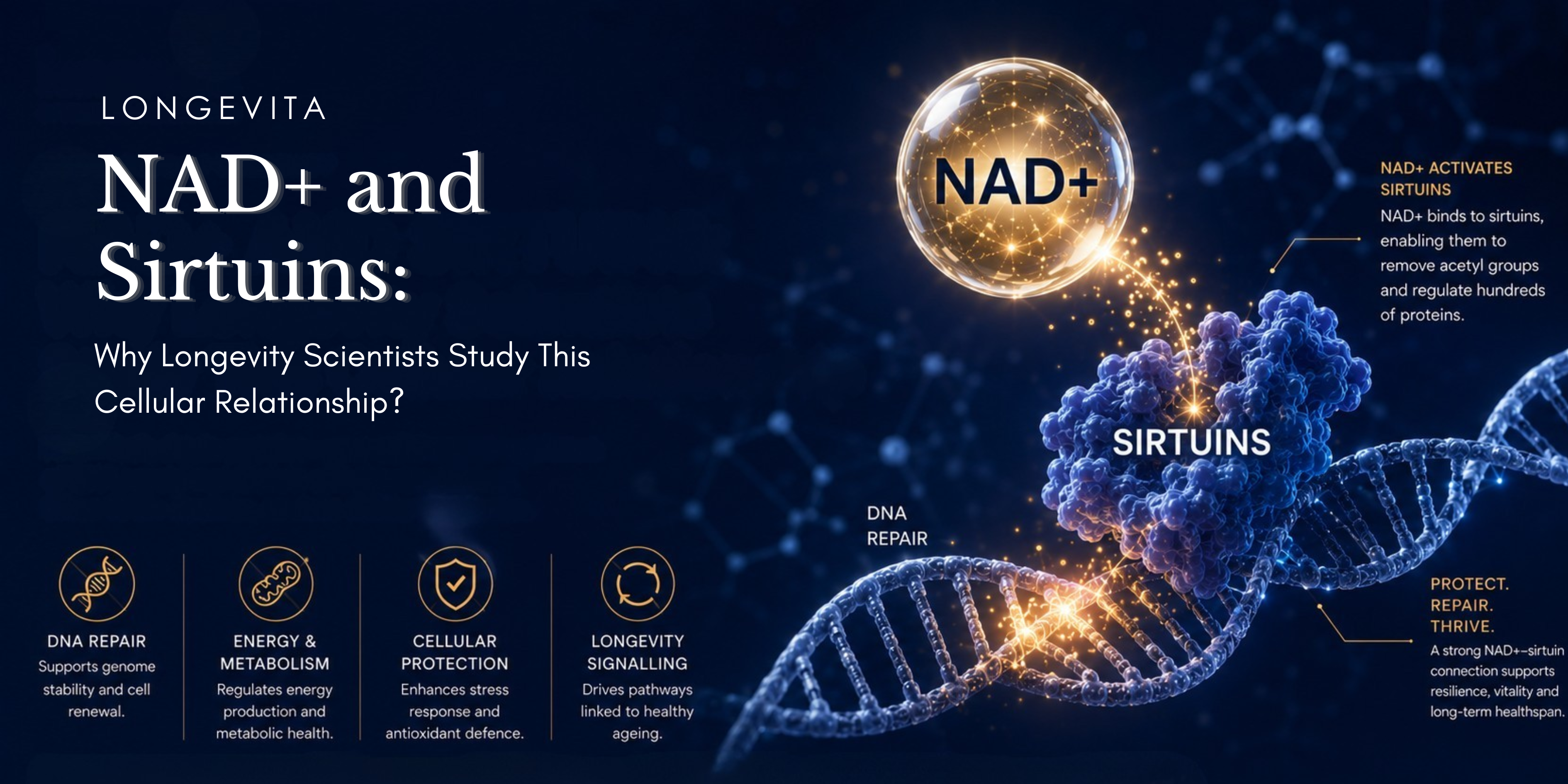
Sirtuins function as NAD+-dependent deacetylases, enzymes that remove acetyl groups from target proteins, a chemical modification that alters how those proteins behave (Imai & Guarente, 2014).
During this deacetylation reaction, NAD+ is consumed and broken down into nicotinamide and other by-products. This means sirtuin activity is not simply supported by NAD+, it is mechanistically dependent on it; without sufficient NAD+ available, sirtuins physically cannot carry out their regulatory functions, regardless of how much sirtuin protein is present in the cell.
This is a key distinction in longevity science: increasing sirtuin gene expression alone is not enough. The cell also needs an adequate NAD+ supply for that sirtuin activity to translate into functional benefit (Rahman et al., 2024).
What Happens to Sirtuin Activity as NAD+ Declines?
Research shows that NAD+ levels fall significantly with age across various tissues, driven by a combination of reduced synthesis and increased consumption by competing NAD+-dependent enzymes (Sun, Wang, Xu & Zhao, 2025).
As NAD+ availability drops, sirtuin activity is thought to decline correspondingly, even in cases where sirtuin protein levels remain relatively stable. Some researchers describe this as a substrate-limited scenario: the machinery is present, but the fuel required to run it is in short supply.
This has significant implications, since reduced sirtuin activity has been associated with impaired mitochondrial function, weakened DNA repair capacity and reduced resilience to metabolic and oxidative stress (López-Otín et al., 2013).
Sirtuins and PARPs: Competing for the Same NAD+ Pool
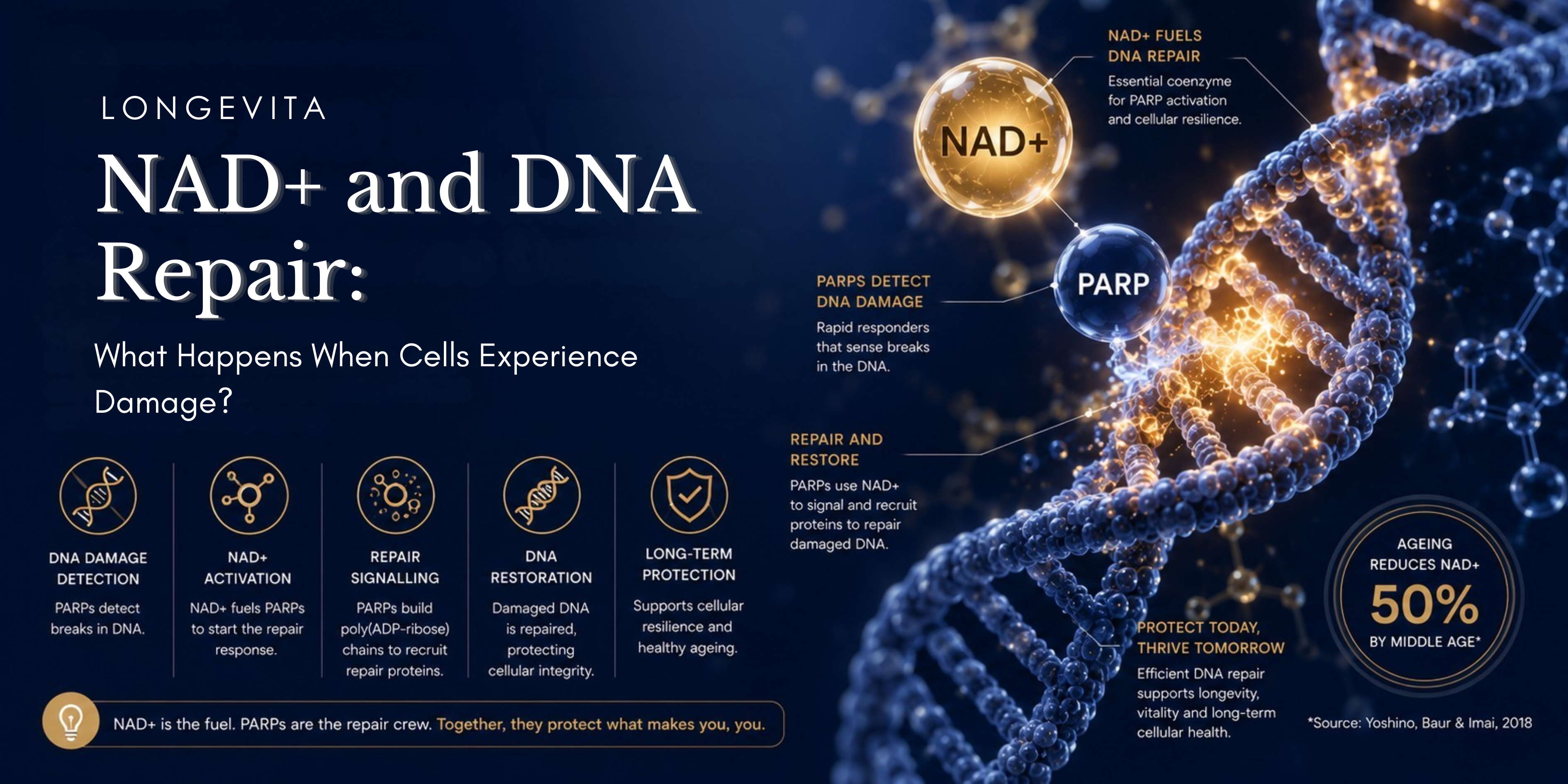
Sirtuins are not the only NAD+-dependent enzymes in the cell. PARPs, a family of enzymes essential for DNA repair, also rely on NAD+ as a substrate, and the two enzyme families draw from the same limited cellular pool (Sun, Wang, Xu & Zhao, 2025).
Research suggests that when DNA damage accumulates with age, PARP activity can rise substantially, a phenomenon sometimes described as the "hyperactive PARP" hypothesis. Because PARPs and sirtuins compete for the same NAD+ supply, sustained PARP overactivation may leave less NAD+ available for sirtuin-mediated processes, compounding the effects of age-related NAD+ decline (Rahman et al., 2024).
This competitive relationship illustrates why NAD+ availability, rather than any single enzyme family, is often considered the more foundational variable in cellular ageing research.
Can NAD+ Precursors Support Sirtuin Activity?
Because NAD+ itself is not efficiently absorbed when taken orally, researchers have focused on precursor molecules that the body converts into NAD+ through the salvage pathway, including nicotinamide mononucleotide (NMN) and nicotinamide riboside.
By supporting NAD+ availability, these precursors are believed to help restore the substrate conditions sirtuins need to function, an approach studied across multiple models of ageing and metabolic stress (Rahman et al., 2024). This is why NAD+ precursor supplementation has become one of the most active areas of interest in longevity science, particularly in the context of supporting sirtuin activity, mitochondrial health and DNA repair capacity as NAD+ levels decline with age.
The Role of Sirtuin Activators
Alongside NAD+ precursors, researchers have also studied compounds capable of directly activating sirtuin proteins, most notably SIRT1, independent of raising NAD+ levels.
Polyphenols such as resveratrol and its more bioavailable analogue pterostilbene have been studied for their ability to activate SIRT1 and support downstream processes including mitochondrial biogenesis, autophagy and DNA repair (López-Otín et al., 2013). This dual approach, supplying NAD+ as substrate while also supporting sirtuin activation directly, reflects an increasingly favoured strategy in longevity formulation science.
Supporting Healthy Ageing
While the NAD+-sirtuin relationship is a foundational piece of the puzzle, healthy ageing is influenced by many interacting factors, including mitochondrial health, oxidative stress and chronic low-grade inflammation.
Regular exercise, quality sleep, balanced nutrition and stress management have all been shown to support NAD+ metabolism and sirtuin function naturally.
Supplements may provide additional support, but they work best as part of a broader, multi-pathway approach to cellular health.
How Does Longevita™ Support the NAD+-Sirtuin Axis?
The research summarised here points to a clear conclusion: supporting sirtuin activity requires more than a single ingredient. It requires adequate NAD+ substrate, direct sirtuin activation, and support for the broader mitochondrial and antioxidant systems sirtuins regulate.
This is the scientific rationale behind The Longevita™ Supplement, a doctor-formulated, 12-ingredient longevity formula designed to target the key hallmarks of ageing by promoting cellular energy, helping manage senescent cell burden, and strengthening antioxidant and inflammation defence systems.
At its core, Longevita™ combines Nicotinamide Riboside Chloride, which boosts NAD⁺ levels to activate sirtuins and enhance DNA repair, with Nicotinamide, which sustains NAD⁺ pools for mitochondrial energy and antioxidant defence. Working alongside these precursors, Trans-Resveratrol directly activates SIRT1 for mitochondrial function while promoting autophagy and DNA repair, and Pterostilbene activates SIRT1/AMPK pathways to enhance mitochondrial biogenesis with superior bioavailability.
The formula also includes Calcium Alpha Ketoglutarate, which enhances mitochondrial energy and reduces inflammaging via epigenetic modulation, and Fisetin, which removes senescent cells and supports mitochondrial function and glutathione. Piperine upregulates antioxidant enzymes and enhances mitochondrial biogenesis via PGC-1α, while Ginseng activates antioxidant pathways and promotes autophagy via SIRT1 and FOXO signalling, both reinforcing the sirtuin-linked pathways central to this formulation. Coenzyme Q10 preserves mitochondrial ATP production and reduces oxidative stress system-wide, while L-Theanine, Lutein and Hyaluronic Acid extend support to cognition, visual health and skin structure, reflecting the wide-reaching effects of cellular ageing across the body.
Formulated by a doctor and longevity specialist, and manufactured in a GMP-certified, USFDA-registered facility with third-party testing for potency and contaminants, Longevita™ is built on the premise that supporting the NAD+-sirtuin relationship requires addressing substrate supply and direct activation together, not in isolation.
The Bottom Line
Sirtuins are among the most extensively studied proteins in longevity science, but their function depends entirely on adequate NAD+ availability. As NAD+ declines with age, sirtuin activity appears to decline correspondingly, contributing to reduced resilience against metabolic, oxidative and DNA-damage-related stress.
While no supplement can halt the ageing process, understanding the NAD+-sirtuin relationship helps explain why single-ingredient approaches may fall short, and why formulations combining NAD+ precursors with direct sirtuin activators are gaining attention in longevity science. Combined with healthy lifestyle habits, this may help support resilience, wellbeing and long-term healthspan.
Explore The Longevita™ Supplement, a doctor-formulated, 12-ingredient longevity formula designed to support NAD+ status, sirtuin activity and cellular resilience as part of a daily routine.
FAQs
1. Why do sirtuins need NAD+ to function?
Sirtuins are NAD+-dependent deacetylases, meaning they use NAD+ as a required substrate to remove acetyl groups from target proteins. Without sufficient NAD+, sirtuins cannot carry out this reaction, regardless of how much sirtuin protein is present.
2. Which sirtuin is most studied in longevity science?
SIRT1 is the most extensively studied, with documented roles in metabolism, inflammation and DNA repair. SIRT3 supports mitochondrial energy metabolism, while SIRT6 plays a role in genome stability.
3. Do PARPs and sirtuins compete for NAD+?
Yes. Both enzyme families are NAD+-dependent and draw from the same cellular pool. Research suggests that age-related PARP overactivation, driven by accumulating DNA damage, may leave less NAD+ available for sirtuin-mediated processes.
4. Can supplements support both NAD+ levels and sirtuin activation?
Some ingredients, such as nicotinamide riboside, support NAD+ synthesis, while others, such as resveratrol and pterostilbene, are studied for directly activating SIRT1. Combining both approaches reflects current thinking in longevity formulation science.
References
Imai, S. & Guarente, L. (2014) 'NAD+ and sirtuins in ageing and disease', Trends in Cell Biology, 24(8), pp. 464–471.
López-Otín, C., Blasco, M.A., Partridge, L., Serrano, M. & Kroemer, G. (2013) 'The hallmarks of aging', Cell, 153(6), pp. 1194–1217.
Rahman, M.H., Bhusal, A., Kim, J.H., Jha, M.K., Song, G.J., Go, Y., Jang, I.S., Lee, I.K. & Suk, K. (2024) 'Role and potential mechanisms of nicotinamide mononucleotide in aging', Frontiers in Ageing Neuroscience, 16, Article 1362151.
Sun, J.Y., Wang, Z.F., Xu, W.H. & Zhao, J. (2025) 'NAD+ glycohydrolases-CD38 as a therapeutic target in ageing: physiological roles, molecular mechanisms, and future opportunities in anti-ageing research', Biochemical and Biophysical Research Communications, in press.